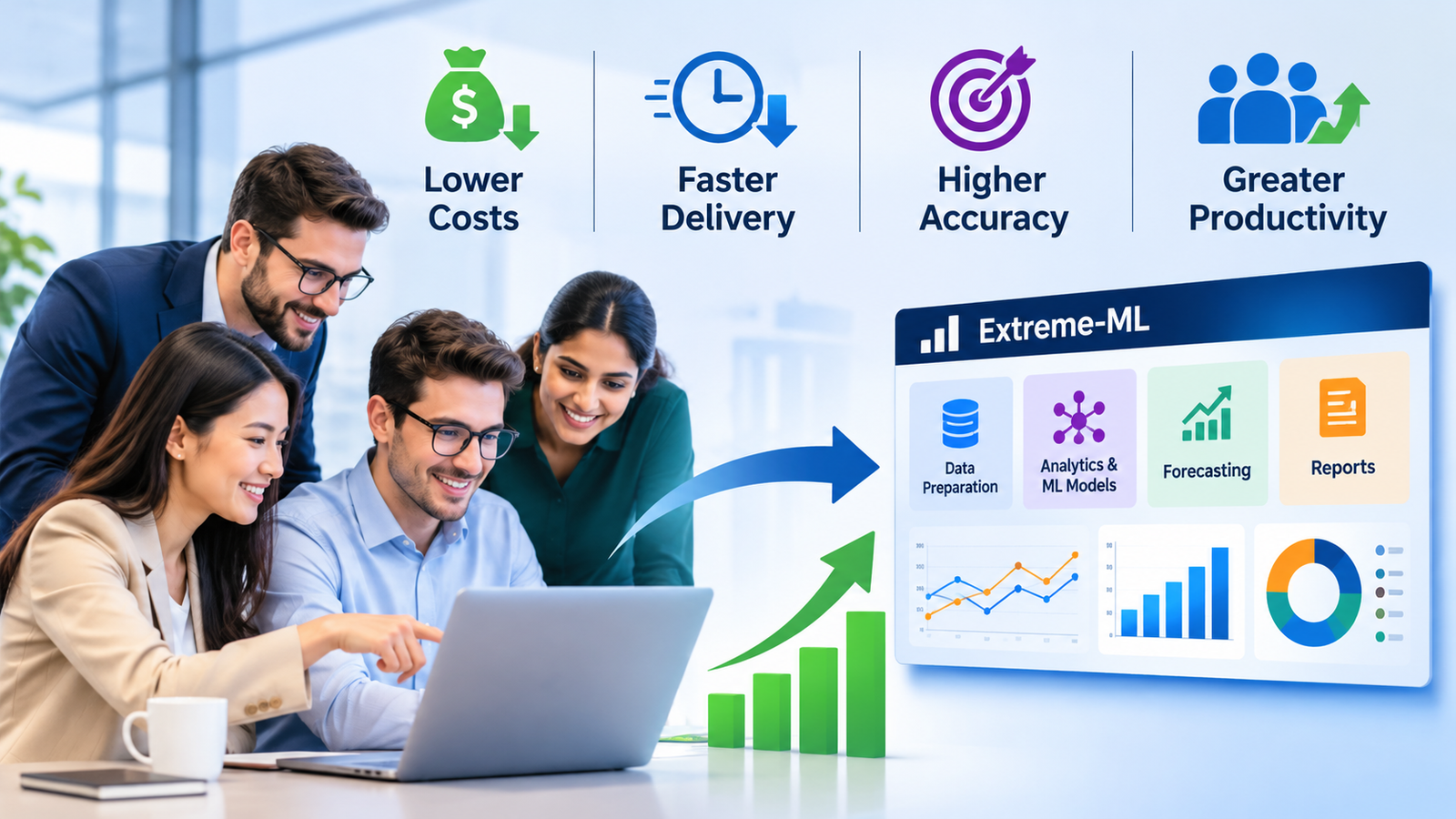
How AI-powered analytics platforms can help consulting firms reduce technology costs, cut GenAI token consumption, accelerate project delivery and build leaner analytical teams.
The Changing Economics of Analytics Consulting
Analytics consulting is fundamentally different from analytics operations within a large enterprise.
A bank or large corporation may have established analytical processes, legacy applications, years of accumulated code and standardised reporting formats. Its analytical teams often need to maintain, execute and enhance these existing systems.
Consultancy firms operate in a very different environment.
A new client often means a new dataset, a new business problem, a different analytical requirement and a fresh set of deliverables. What worked for one client may have little relevance to the next.
For such organisations, the biggest competitive advantage is not necessarily the ability to maintain sophisticated legacy code. It is the ability to understand a new problem, analyse unfamiliar data and deliver meaningful insights quickly.
This creates an interesting question:
❓ Can an analytics consultancy deliver significantly more projects without proportionately increasing its manpower, technology costs and operational overheads?
We believe the answer lies in rethinking the way analytics teams operate.
Seven Ways an AI-Powered Analytics Platform Can Transform Consulting Operations
1. One Platform Instead of Multiple Analytical Tools
A typical data analytics consulting firm may use different applications for data preparation, statistical analysis, visualisation, machine learning, forecasting, sentiment analysis and reporting.
This creates multiple costs:
➡️ Software licences and subscriptions.
➡️ Integration and data transfer efforts.
➡️ Training employees on different applications.
➡️ Maintaining different analytical environments.
➡️ Managing compatibility between tools.
A unified analytics platform can consolidate many of these activities.
With Extreme-ML, teams can perform data treatment, exploratory data analysis, statistical analysis, visualisation, predictive modelling, forecasting, sentiment analysis and other analytical activities within one environment.
✅ Fewer tool dependencies.
✅ Reduced operational complexity.
✅ Potentially significant savings in technology costs.
2. Reduce GenAI Token Costs by Up to 95% in Data Science Workflows
Generative AI tools such as ChatGPT and Claude have made coding and data analysis more accessible. However, using LLMs for every analytical task can introduce another layer of operational costs.
Consider a typical data science assignment.
An analyst may repeatedly prompt an LLM to:
➡️ Generate Python code for data cleaning and transformations.
➡️ Develop regression or classification models.
➡️ Create visualisations and interpret statistical outputs.
➡️ Debug errors and modify code.
➡️ Perform forecasting, clustering or sentiment analysis.
➡️ Generate reports and explain analytical findings.
These repeated interactions consume tokens, take time and can introduce inconsistent outputs or incorrect interpretations.
But does every data science task really need Generative AI?
Many analytical activities already have established statistical methods and machine learning algorithms that can execute these tasks directly.
Extreme-ML follows precisely this approach.
It enables users to perform a wide range of data science and machine learning activities without repeatedly prompting an LLM or consuming GenAI tokens for every analytical step.
✅ Up to 95% reduction in GenAI token costs for applicable data science workflows, as discussed in our detailed analysis.
✅ Less dependency on LLMs for routine analytical execution.
✅ Fewer repeated prompts, code-generation cycles and debugging interactions.
✅ More direct execution through established statistical and machine learning algorithms.
Importantly, Extreme-ML does not attempt to replace Generative AI altogether. It reduces the need to use expensive LLM interactions for tasks that specialised analytical methods can perform more directly.
The idea is simple: Use GenAI where it adds value, not where established analytical algorithms can do the job more efficiently.
Read more: Cut Up to 95% of GenAI Token Costs in Data Science with Extreme-ML
3. Statistical Rigor Without Depending Entirely on Individual Coding Skills
One of the less visible challenges in analytics consulting is consistency.
Two analysts working on the same dataset may choose different approaches, write different code and arrive at different conclusions. The quality of the output can become heavily dependent on individual experience.
An analytical platform with built-in statistical methods, standardised workflows and appropriate validation mechanisms can help reduce this variability.
Extreme-ML provides access to established statistical and machine learning methods without requiring users to independently develop code for every assignment.
It also reduces the risk of relying on LLM-generated code or statistical interpretations without adequate validation.
✅ More consistent analytical practices.
✅ Reduced dependence on individual coding styles.
✅ Less exposure to avoidable coding and interpretation errors.
✅ Greater focus on methodology, validation and business interpretation.
This does not eliminate the need for statistical understanding or professional judgement. Rather, it allows analysts to spend more time interpreting results and less time implementing routine analytical procedures.
4. Higher Productivity and Faster Project Turnaround
Time is money in consulting.
Every additional week spent preparing data, writing code, debugging scripts or creating charts reduces the time available for solving business problems.
Consider a typical consulting engagement:
- A client shares a new dataset.
- Analysts understand and prepare the data.
- They perform exploratory analysis.
- They develop predictive or descriptive models.
- They interpret results and identify business opportunities.
- They prepare reports and present recommendations.
Much of this process involves repetitive analytical activities.
A zero-code, zero-text-prompt platform such as Extreme-ML can simplify several of these steps, allowing analysts to move from data to insights much faster.
✅ More projects delivered with the same team size.
✅ Faster turnaround times.
✅ Less time spent on routine technical execution.
✅ More time available for solving business problems.
5. One-Click Documentation and Faster Client Reporting
Consulting firms do not just deliver analytical results. They deliver reports, presentations, methodologies and recommendations.
Unfortunately, documentation and report preparation can consume a disproportionate amount of analyst time.
Think about the effort involved in documenting:
➡️ Data preparation and treatment.
➡️ Statistical analysis.
➡️ Model development and evaluation.
➡️ Visualisations and analytical findings.
➡️ Business recommendations.
Extreme-ML’s documentation capabilities and organised PDF report generation can help automate much of this effort.
Imagine completing an analytical exercise and generating an organised, presentation-style PDF without spending hours manually transferring charts, tables and findings into a separate reporting application.
✅ Less time spent preparing deliverables.
✅ Better organised analytical documentation.
✅ More time for insights and client discussions.
6. A Learning Curve Measured in Days, Not Months
Recruiting experienced data scientists is expensive. Training junior analysts to independently perform sophisticated analytical tasks can take considerable time.
Traditional analytical environments often require knowledge of programming languages, libraries, statistical packages and multiple visualisation tools.
A zero-code, zero-prompt analytical environment changes this equation.
With an intuitive interface and an AI guidance available at different stages, Extreme-ML aims to make a wide range of analytical activities accessible to people without programming backgrounds.
Depending on their prior analytical knowledge and exposure, employees should typically be able to become comfortable with the platform within approximately a week.
✅ Reduced onboarding time.
✅ Less dependence on programming skills.
✅ A wider pool of employees capable of undertaking analytical assignments.
✅ Faster workforce deployment across projects.
7. A Flatter Organisation With Less Dependence on Senior Technical Resources
This is perhaps one of the most interesting opportunities for consulting firms.
Consider a traditional analytics team with ten junior analysts and a few experienced professionals.
Senior resources often spend a substantial amount of time:
➡️ Reviewing code.
➡️ Debugging analytical scripts.
➡️ Resolving technical issues.
➡️ Explaining implementation approaches.
➡️ Helping junior employees navigate different tools.
Much of this work is necessary because analytical execution depends heavily on individual coding capabilities.
With a common analytical platform, the operating model can be different.
Junior analysts can independently undertake a wider range of analytical activities. Experienced professionals can concentrate on reviewing outputs, validating assumptions, challenging findings and guiding business interpretation.
In a suitable operating environment, one experienced analytical professional could potentially guide a team of ten analysts, rather than having multiple senior resources involved in routine execution and troubleshooting.
This is not a guaranteed employee-to-manager ratio. It depends on project complexity, analyst capability and the quality of review processes.
But the opportunity is significant.
The objective should be to build an organisation where senior professionals multiply the productivity of junior analysts rather than spend most of their time solving their technical problems.
8. Better Management Through Analytical Review, Not Just Status Reporting
There is one organisational issue worth highlighting.
Some consulting organisations have developed management structures where managers primarily allocate work, collect status updates and coordinate deliverables.
But who actually reviews the analytical output?
Who challenges the assumptions? Who checks whether the model makes business sense? Who ensures that the conclusions are supported by the data?
An analytics organisation needs managers who understand analytical outputs and are willing to invest time in reviewing them.
Technology can reduce execution effort, but it cannot replace accountability and professional judgement.
Our suggestion is simple:
➡️ Avoid building multiple layers of administrative coordination.
➡️ Invest in professionals who can guide analysts, challenge findings and ensure the quality of client deliverables.
➡️ Encourage managers to spend more time reviewing analytical outputs rather than merely tracking project status.
A good analytical platform makes such a lean operating model more practical.
Is Extreme-ML Suitable for Every Consulting Firm?
Not necessarily. And it is important to understand the distinction.
Extreme-ML is particularly relevant for consulting firms that regularly encounter new clients, new datasets and new analytical problems.
For example:
✅ Data analytics and business intelligence consulting.
✅ Predictive modelling and machine learning consulting.
✅ Customer analytics and segmentation.
✅ BFSI analytics and risk consulting.
✅ Marketing analytics and campaign optimisation.
✅ Forecasting and demand planning.
✅ Sentiment analysis and text analytics.
✅ Data-driven business strategy and decision support.
However, there are consulting engagements where the primary requirement is simply to execute existing code, feed data into predefined formats and populate established dashboards or reports.
If the entire analytical process is already automated and requires little modification, replacing that environment may not generate meaningful incremental benefits.
Extreme-ML is not necessarily intended to replace every legacy application or every line of code.
Its strongest proposition is for organisations that repeatedly need to perform new analytical work.
Why Extreme-ML?
Extreme-ML is a unified, zero-code, zero-text-prompt AI-powered data science and analytics platform designed to make advanced analytical capabilities accessible without requiring users to write Python, SAS or R code or construct lengthy AI prompts.
It brings together data preparation, statistical analysis, visualisation, machine learning, forecasting, sentiment analysis and reporting in one environment.
Its underlying philosophy is straightforward:
➡️ Make advanced analytics accessible to more people.
➡️ Reduce repetitive technical effort.
➡️ Maintain analytical and statistical discipline.
➡️ Accelerate the journey from raw data to actionable insights.
➡️ Reduce dependence on multiple tools and specialised technical resources.
➡️ Avoid unnecessary GenAI token consumption for routine analytical tasks.
For consulting firms, this is not merely about adopting another software application.
It is about changing the economics of delivering analytics projects.
A New Operating Model for Analytics Consulting
The traditional consulting model often assumes that increasing project volume requires increasing the number of analysts, programmers and technical specialists.
But what if a significant portion of analytical execution could be simplified and standardised through a unified platform?
What if junior analysts could undertake work that previously required considerably more technical assistance?
What if experienced professionals could focus on quality, interpretation and client value rather than routine coding and troubleshooting?
What if consulting firms could also reduce their dependence on expensive GenAI interactions for routine data science activities?
That could fundamentally change how analytics consulting organisations scale.
The real competitive advantage may not come from having the largest analytics team. It may come from having the most productive analytics team.
Extreme-ML aims to help consulting firms move towards precisely that model.
More Projects. Leaner Teams. Faster Analytics. Lower Costs.
Explore Extreme-ML:
➡️ Platform: https://pro-datascience.com/extreme-ml/
➡️ Experience the 24×7 online demo: https://demo.extrememl.ai/
➡️ Understand the GenAI token cost advantage: https://pro-datascience.com/cut-up-to-95-of-genai-token-costs-in-data-science-with-extreme-ml-zero-code-zero-prompt-analytics/
Extreme-ML – Bridge the Gap Between Data and Actionable Insights.
Primary Focus : AI-powered analytics platform for consulting firms
Other points discussed :
- Data analytics consulting software
- Zero-code data science platform
- AI-powered data analytics
- Reduce GenAI token costs
- Machine learning automation for consulting firms
- Analytics consulting productivity
- Data science automation
- Consulting firm cost optimisation
- Unified analytics platform
- Statistical analytics without coding
Tags – Analytics Consulting, Data Science, AI-Powered Analytics, Zero-Code Analytics, Machine Learning, Business Intelligence, Consulting Productivity, Extreme-ML, GenAI Token Cost, Data Analytics Automation, Generative AI